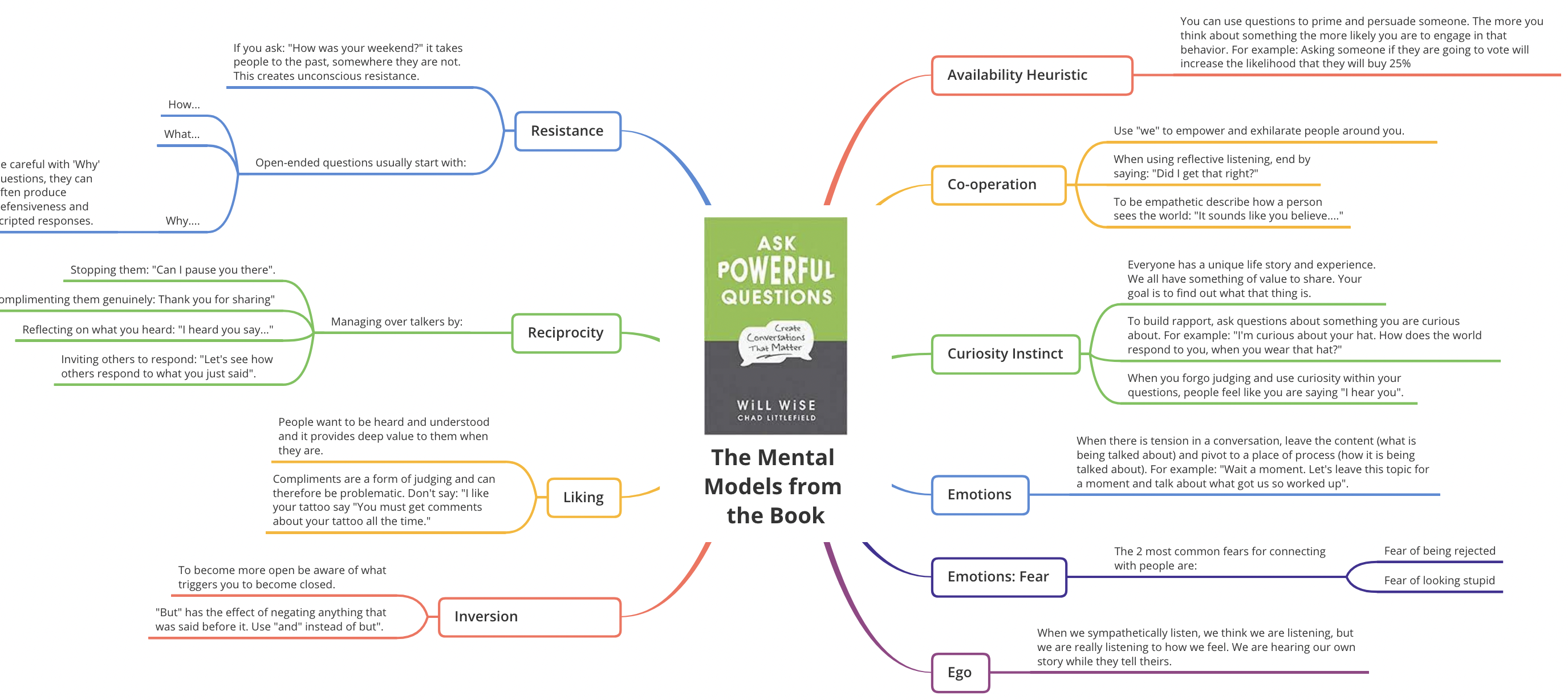
'Ask Powerful Questions' Summary
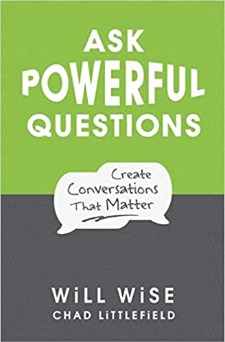
- Amazon: Link
- Score: 6/10
- Category: Questioning
- Mental Models: Availability Heuristic, Curiosity Instinct, Co-operation, Ego, Emotions: Fear, Inversion, Liking, Reciprocity, Resistance
Mental Models from the book:
'Ask Powerful Questions' can be summarised into 9 mental models:
1. Availability Heuristic
- You can use questions to prime and persuade someone. The more you think about something the more likely you are to engage in that behavior. For example: Asking someone if they are going to vote will increase the likelihood that they will buy 25%
2. Curiosity Instinct
- Everyone has a unique life story and experience. We all have something of value to share. Your goal is to find out what that thing is.
- To build rapport, ask questions about something you are curious about. For example: "I'm curious about your hat. How does the world respond to you, when you wear that hat?"
- When you forgo judging and use curiosity within your questions, people feel like you are saying "I hear you".
3. Co-operation
- Use "we" to empower and exhilarate people around you.
- When using reflective listening, end by saying: "Did I get that right?"
- To be empathetic describe how a person sees the world: "It sounds like you believe...."
4. Ego
- When we sympathetically listen, we think we are listening, but we are really listening to how we feel. We are hearing our own story while they tell theirs.
5. Emotions
- When there is tension in a conversation, leave the content (what is being talked about) and pivot to a place of process (how it is being talked about). For example: "Wait a moment. Let's leave this topic for a moment and talk about what got us so worked up".
5.1 Emotions: Fear
- The 2 most common fears for connecting with people are:
- Fear of being rejected
- Fear of looking stupid
6. Inversion
- To become more open be aware of what triggers you to become closed.
- "But" has the effect of negating anything that was said before it. Use "and" instead of but".
7. Liking
- People want to be heard and understood and it provides deep value to them when they are.
- Compliments are a form of judging and can therefore be problematic. Don't say: "I like your tattoo say "You must get comments about your tattoo all the time."
8. Reciprocity
- Managing over talkers by:
- Stopping them: "Can I pause you there".
- Complimenting them genuinely: Thank you for sharing"
- Reflecting on what you heard: "I heard you say..."
- Inviting others to respond: "Let's see how others respond to what you just said".
9. Resistance
- If you ask: "How was your weekend?" it takes people to the past, somewhere they are not. This creates unconscious resistance.
- Open-ended questions usually start with: How/What/Why. Be careful with 'Why' questions, they can often produce defensiveness and scripted responses.
Mental Model Mind Maps
Mind maps can help you to remember the most important parts of a book. Signup to my newsletter below to get a free mindmap of this book: