The Lessons from Artificial Intelligence
"The quality and quantity of data used to train an AI system can significantly impact its performance. Small improvements in the quality or amount of data can lead to significant improvements in accuracy and performance."
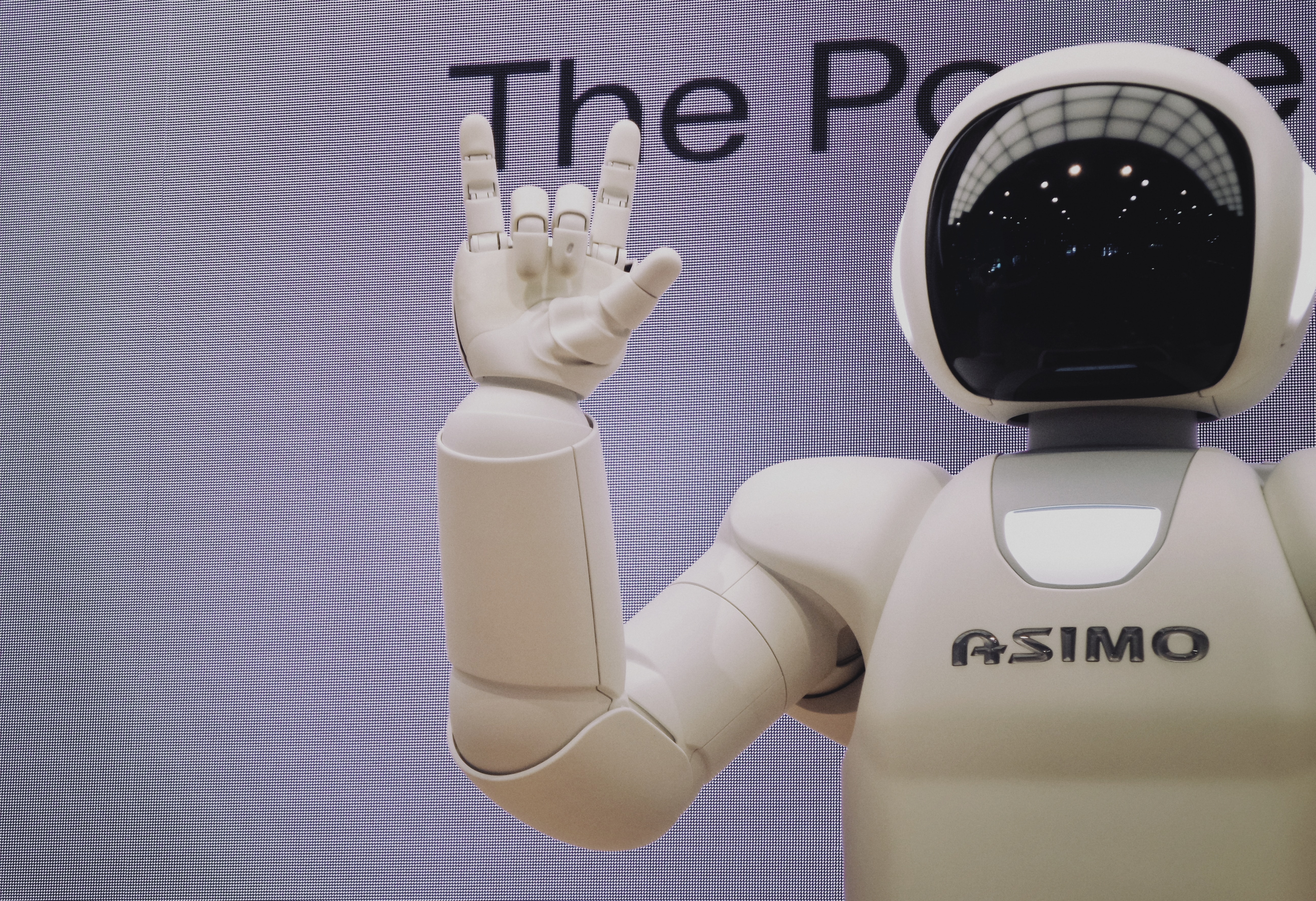
I Interviewed ChatGBT and was blown away by the response. If you are interested (or scared!) by the future of Artificial Intelligence, read on to discover some of the multidsiplanry lessons from the sector:
1. What life lessons can be learned from artificial intelligence?
Artificial Intelligence (AI) has the potential to teach us many valuable life lessons, some of which include:
- Embrace change: AI is constantly evolving and improving, and this teaches us that change is inevitable in life. It is important to be adaptable and open to new ideas and technologies.
- Patience is key: AI requires a lot of time, effort, and patience to train and develop. This reminds us that success in life often requires hard work and perseverance.
- Collaboration is important: AI works best when multiple systems and data sources are combined to achieve a common goal. This teaches us the importance of collaboration and teamwork in achieving our own goals.
- Attention to detail matters: AI algorithms are built on the smallest details, and the accuracy of these details can impact the entire system. This teaches us that paying attention to the small details in our own lives can make a big difference in achieving success.
- Ethics matter: As AI becomes more advanced, it raises important ethical questions around privacy, bias, and accountability. This teaches us the importance of considering the ethical implications of our actions and decisions in life.
- Continuous learning is essential: AI is constantly learning and adapting to new data, which highlights the importance of continuous learning in our own lives to stay relevant and adaptable.
- Data is powerful: AI is powered by data, and the quality and quantity of data can impact the accuracy and effectiveness of AI systems. This teaches us the power of data and the importance of collecting and analyzing data to make informed decisions in our own lives.
2. What do you consider ‘beauty’ within Artificial Intelligence?
In the field of computer science and artificial intelligence, "beauty" is often associated with elegance and simplicity in algorithms and code. Beautiful code is code that is efficient, readable, and easy to understand and modify. It is also code that is well-documented and well-organized, with clear and concise functions and classes that make it easy to reuse and maintain. Additionally, in machine learning and natural language processing, "beauty" can also refer to models or systems that perform with high accuracy, precision, and recall, which means that they can classify or predict with a high degree of confidence and consistency. Overall, in the field of computer science and artificial intelligence, "beauty" is often associated with functionality and performance rather than aesthetic or visual appeal.
3. What are the main principles of AI? What principles from AI can be applied to other fields?
The main principles of AI can vary depending on the specific subfield, but there are some general principles that are widely recognized:
- Learning: AI systems are designed to learn and improve over time, either through supervised learning (where humans provide labeled examples for the system to learn from) or unsupervised learning (where the system must identify patterns on its own).
- Reasoning: AI systems use logical reasoning and decision-making processes to make sense of data and draw conclusions.
- Perception: AI systems are designed to perceive and interpret data from the world around them, often using sensors or other devices to gather input.
- Adaptation: AI systems must be able to adapt to new situations and environments, often using feedback mechanisms to modify their behavior.
- Interaction: AI systems are designed to interact with humans and other systems in order to accomplish tasks and achieve goals.
These principles of AI can be applied to other fields in a number of ways. For example, the principles of learning and adaptation can be applied to education and training, where personalized learning experiences can be created for each student based on their individual strengths and weaknesses. The principles of reasoning and decision-making can be applied to fields such as finance and business, where AI can be used to analyze complex data and make recommendations for investment strategies or business decisions. The principles of perception and interaction can be applied to fields such as robotics and healthcare, where AI systems can be used to monitor and respond to patient needs. Overall, the principles of AI can be adapted and applied to many different fields to help us solve complex problems and achieve our goals more effectively.
4. What small things make a big difference in AI?
In AI, there are many small things that can make a big difference in the performance and effectiveness of a system. Here are some examples:
- Data quality: The quality and quantity of data used to train an AI system can significantly impact its performance. Small improvements in the quality or amount of data can lead to significant improvements in accuracy and performance.
- Feature engineering: The features used to represent data can also have a big impact on the performance of an AI system. Careful selection and engineering of features can improve accuracy and reduce computational complexity.
- Hyperparameter tuning: Hyperparameters are adjustable settings in an AI system that control its learning behavior. Small adjustments to hyperparameters can often lead to big improvements in performance.
- Regularization: Regularization techniques can help prevent overfitting (when an AI system memorizes the training data instead of generalizing), which can significantly improve the system's ability to perform on new, unseen data.
- Model architecture: The structure and design of an AI model can also have a big impact on its performance. Small changes to the architecture, such as the number of layers or neurons, can lead to significant improvements in accuracy.
- Ensemble learning: Combining the outputs of multiple AI models (ensemble learning) can often lead to better performance than using a single model alone.
- Transfer learning: Transfer learning involves using a pre-trained model as a starting point for a new task, which can save time and improve performance on the new task.
Overall, many small improvements and optimizations in different areas of an AI system can add up to significant improvements in its overall performance and effectiveness.
5. What is the biggest misconception or the biggest mistake that people make about AI?
One of the biggest misconceptions about AI is that it is all-knowing, infallible, and can replace human intelligence in every way. This is not true. AI systems are limited to the data they are trained on and can only make decisions based on that data. They also can be prone to bias, especially if the data used to train them is biased or incomplete. Therefore, humans are still needed to ensure that AI systems are making decisions that are ethical and fair.
Another common misconception is that AI is always autonomous and does not require human supervision. While some AI systems can operate autonomously, most are designed to work in concert with human operators who provide feedback, monitor performance, and make decisions based on the AI's output.
One of the biggest mistakes that people can make with AI is assuming that it is a "magic bullet" that can solve any problem. AI is a tool, and like any tool, it is only effective when it is used appropriately and in the right context. AI is not a one-size-fits-all solution and may not be the best approach for every problem. Therefore, it's important to consider the strengths and limitations of AI when deciding how to apply it to a particular problem or situation.
Overall, it's important to approach AI with a balanced and realistic perspective, recognizing both its potential and its limitations. By doing so, we can make the most of this powerful technology while ensuring that it is used ethically and responsibly.
6. Which single concept from AI deserves to be more widely known?
One concept from AI that deserves to be more widely known is the idea of explainability or interpretability.
Explainability refers to the ability of an AI system to provide clear and understandable explanations of its decision-making process. This is especially important in cases where AI is making decisions that can have a significant impact on people's lives, such as in healthcare, criminal justice, or financial services. Being able to understand how and why an AI system made a particular decision can help us ensure that those decisions are fair, ethical, and unbiased.
Interpretability, on the other hand, refers to the ability to understand and interpret the internal workings of an AI system. This is particularly important in deep learning and neural networks, where the models can be very complex and difficult to understand. Interpretability can help us understand how the model is making decisions and how it might be improved.
Both explainability and interpretability are crucial concepts in AI because they help ensure that AI systems are transparent, accountable, and trustworthy. They can also help increase public trust in AI and ensure that it is used ethically and responsibly. Therefore, these concepts deserve to be more widely known and understood by everyone who works with AI, as well as the general public.