The Art of Manipulation - 80/20 Summary
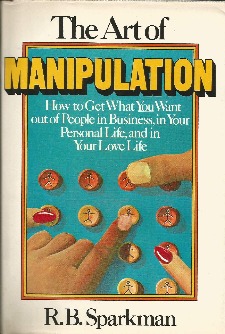
- Amazon: Link
- Score: 10/10
- Skill Category: Persuasion
- Mental Models: Chain Reaction, Choice Architecture, Ego, Emotions: Anger, Resentment, Liking/Disliking, Randomness, Resistance, Scarcity, Second-Order Thinking, Supply & Demand, System 1 vs System 2 Thinking
Mental Models from the book:
'The Art of Manipulation' can be summarised into 6 mental models:
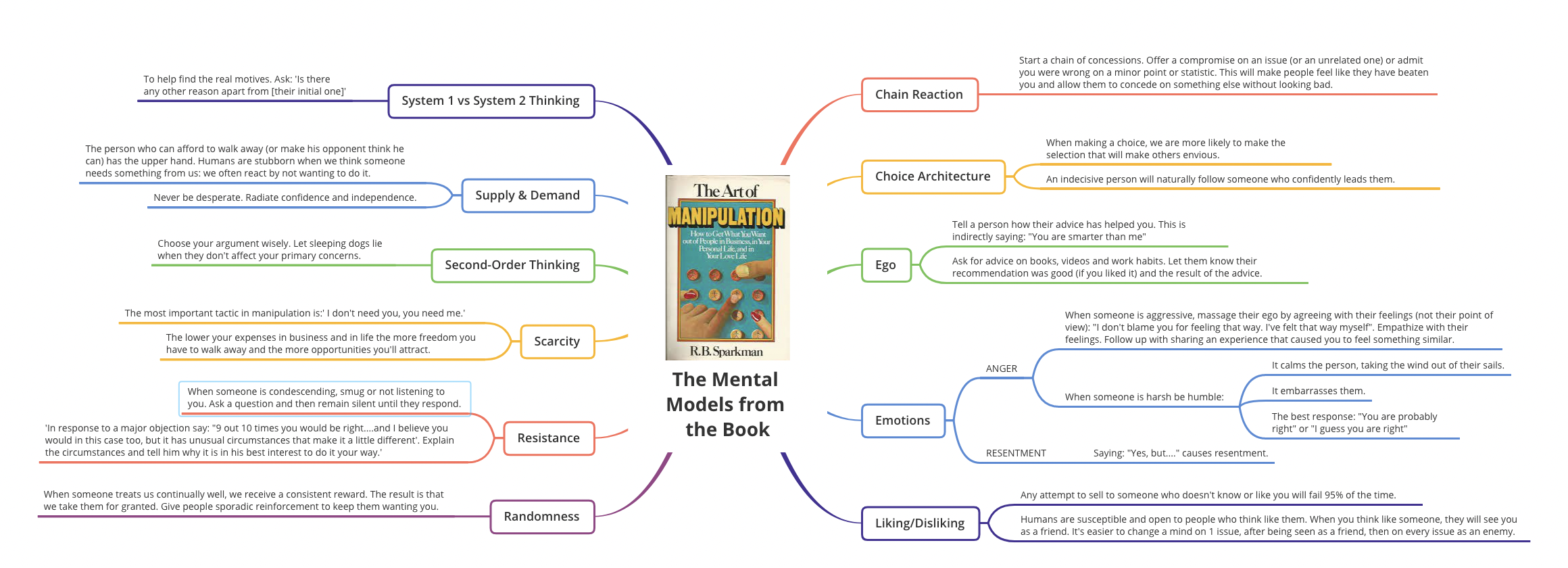
1. Chain Reaction
- Start a chain of concessions. Offer a compromise on an issue (or an unrelated one) or admit you were wrong on a minor point or statistic. This will make people feel like they have beaten you and allow them to concede on something else without looking bad.
2. Choice Architecture
- When making a choice, we are more likely to make the selection that will make others envious.
- An indecisive person will naturally follow someone who confidently leads them.
3. Ego
- Tell a person how their advice has helped you. This is indirectly saying: "You are smarter than me"
- Ask for advice on books, videos and work habits. Let them know their recommendation was good (if you liked it) and the result of the advice.
4.1 Emotions: Anger
- When someone is aggressive, massage their ego by agreeing with their feelings (not their point of view): "I don't blame you for feeling that way. I've felt that way myself". Empathize with their feelings. Follow up with sharing an experience that caused you to feel something similar.
- When someone is harsh be humble:
- It calms the person, taking the wind out of their sails.
- It embarrasses them.
- The best response: "You are probably right" or "I guess you are right"
4.2 Emotions: Resentment
- Saying: "Yes, but...." causes resentment.
5. Liking/Disliking
- Any attempt to sell to someone who doesn't know or like you will fail 95% of the time.
- Humans are susceptible and open to people who think like them. When you think like someone, they will see you as a friend. It's easier to change a mind on 1 issue, after being seen as a friend, then on every issue as an enemy.
6. Randomness
- When someone treats us continually well, we receive a consistent reward. The result is that we take them for granted. Give people sporadic reinforcement to keep them wanting you.
7. Resistance
- When someone is condescending, smug or not listening to you. Ask a question and then remain silent until they respond.
- 'In response to a major objection say: "9 out 10 times you would be right....and I believe you would in this case too, but it has unusual circumstances that make it a little different'. Explain the circumstances and tell him why it is in his best interest to do it your way.'
8. Scarcity
- The most important tactic in manipulation is:' I don't need you, you need me.'
- The lower your expenses in business and in life the more freedom you have to walk away and the more opportunities you'll attract.
9. Second-Order Thinking
- Choose your argument wisely. Let sleeping dogs lie when they don't affect your primary concerns.
10. Supply & Demand
- The person who can afford to walk away (or make his opponent think he can) has the upper hand. Humans are stubborn when we think someone needs something from us: we often react by not wanting to do it.
- Never be desperate. Radiate confidence and independence.
11. System 1 vs System 2 Thinking
- To help find the real motives. Ask: 'Is there any other reason apart from [their initial one]'
Mental Model Mind Maps:
Mind maps can help you to remember the most important parts of a book. Signup to my newsletter below to get a free mindmap of this book: